Closet organization · OCTOBER 3, 2026
Choose shoe storage by the shoes you wear
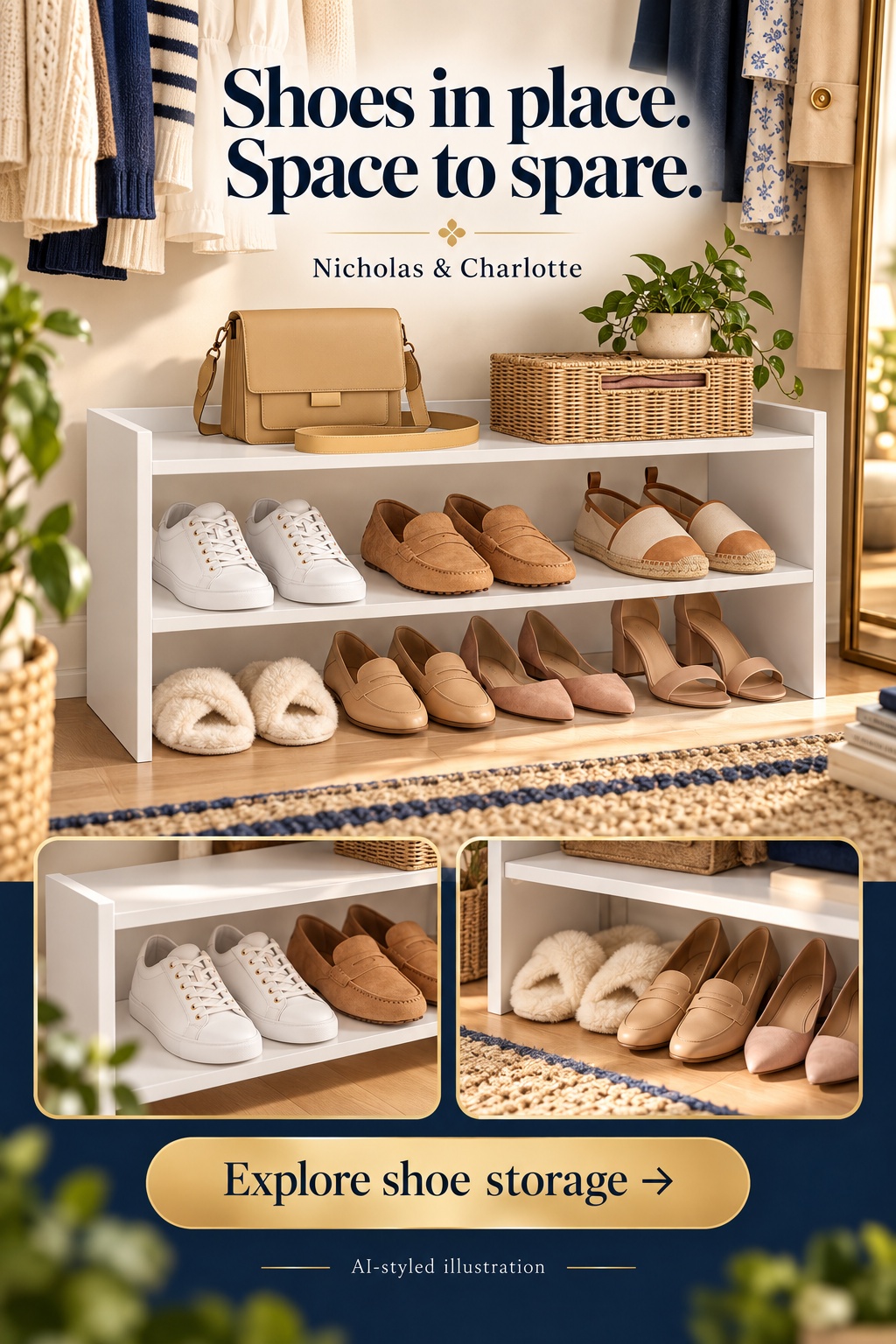
A shoe shelf should fit both the closet and the footwear. A neat row of small shoes in a photograph tells you little about your boots, wide trainers, or the path through your room.
Count the everyday pairs
Separate shoes worn this week from seasonal or occasional pairs. Decide where muddy or wet shoes can dry according to their care instructions. Do not pack them into closed storage while damp. Keep the pairs you use together so getting dressed does not require a search.
Measure the shoes and the shelf
Measure the longest pair and the tallest footwear you want to store. Compare those measurements with the usable shelf depth and clear height between levels. Consider the shelf surface too: a bar shelf may suit trainers while narrow heels need a different support. Check the product instructions rather than relying on a styled image.
Protect the walking route
Mark the shelf footprint on the floor. Open nearby doors and drawers. Walk past it carrying a bag. If it interrupts the route, use a smaller unit or put occasional pairs elsewhere. Review the arrangement after several mornings; the best position is the one you can maintain without thinking.
Your next steps
- Count everyday pairs separately from occasional pairs.
- Measure the longest and tallest shoes.
- Check shelf depth, height and surface.
- Test the walking route and door swing.
- Follow the manufacturer’s assembly and stability instructions.
AN OPTION TO COMPARE
VASAGLE CUSTOS two-tier shoe shelf
Confirm the current dimensions, shelf clearances and assembly requirements. The illustration does not establish capacity for your footwear.
We have not personally tested this product. Check the current listing for price, availability, specifications and instructions.
View product details on AmazonOrdinary product link. We currently earn no commission from it.
Keep exploring